
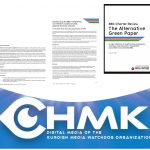

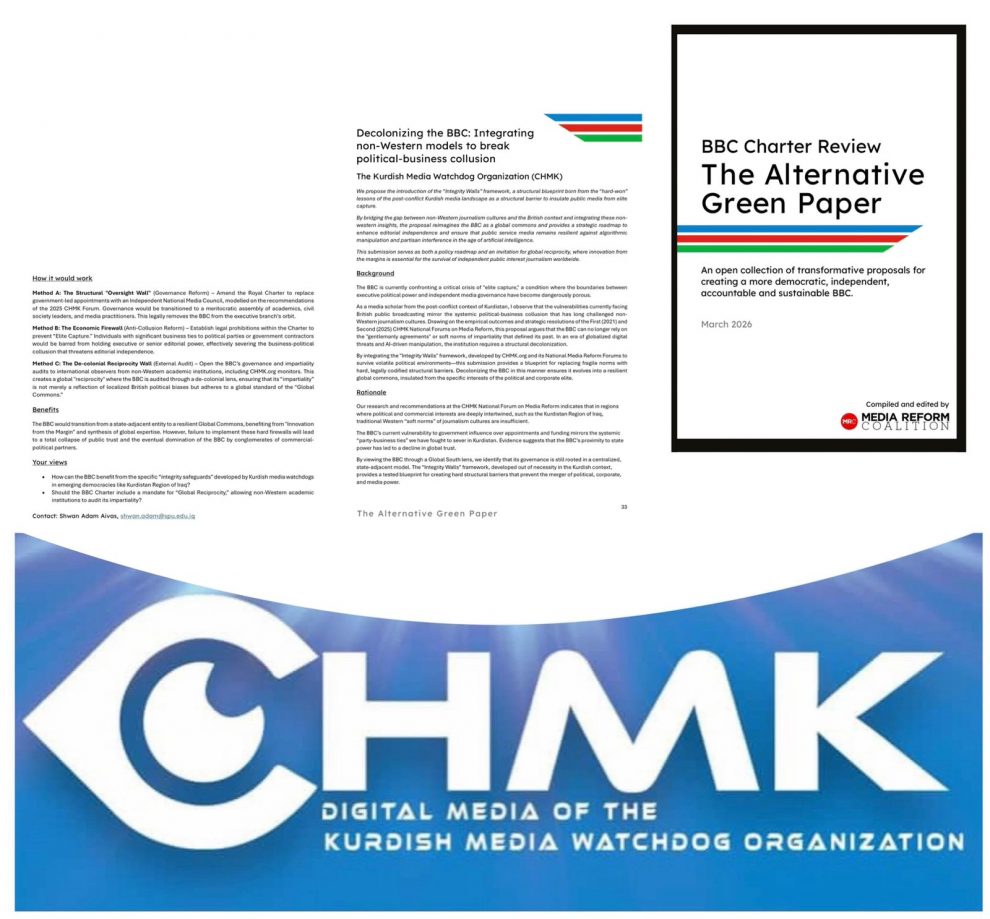
CHMK, LONDON: In a milestone for international media policy, Associate Prof. Dr. Shwan Adam Aivas, Chairperson of the Kurdish Media Watchdog Organization (CHMK), joined British lawmakers and leading academics on March 3, 2026, to debut a radical vision for the future of the BBC. Participating in the high-level online launch of the Alternative Green Paper, Dr. Aivas proposed that the UK’s national broadcaster should look to the “Global South” to find the necessary tools to break the cycle of political and business collusion.
The “Global Reciprocity” Model
During the event, which featured Clive Lewis MP and contributors from the Media Reform Coalition (MRC), Dr. Aivas provided a critical international perspective on the BBC’s Royal Charter review. He argued that the threat of “elite capture” is a universal challenge that requires a global solution:
“Drawing on the invaluable insights provided by our contributors, we propose that the new BBC Charter Review should move beyond a UK-centric lens to embrace a model of global accountability. By leveraging the sophisticated integrity safeguards pioneered by media watchdogs in the Global South, the BBC can better insulate itself from political and commercial pressures.”
Additionally, Dr. Aivas called for a new principle of “Global Reciprocity,” which would mandate that the BBC open its governance to international academic audits and collaborative networks with global civil society, ensuring it remains “authentically answerable” to the public it serves.
Core Proposal: The Three “Integrity Walls”
In his featured paper, From CHMK to MRC: A Kurdish Proposal for the BBC Charter Review, Dr. Aivas details a strategy to dismantle the BBC’s “state-adjacent” structure through three structural barriers:
- The Oversight Wall: Transitioning from government-appointed boards to an Independent National Media Council led by civil society.
- The Anti-Collusion Firewall: Establishing “hard” legal restrictions to prevent the “revolving door” between political offices and media leadership.
- The De-colonial Reciprocity Wall: Utilizing international observers—including organizations like CHMK—to audit impartiality through a non-Western lens.
A Roadmap for Democratic Media
The Alternative Green Paper serves as a robust, public-led response to the UK Government’s official Charter review. The project is organized into key democratic pillars:
-
Media Commons: Moving toward public, rather than state, ownership.
-
Democratic Governance: Decentralizing power away from the Prime Minister’s office.
-
Sustainable Funding: Protecting independence by securing non-political funding streams.
-
Representing Diversity: Bridging the gap between Western theory and the practical, resilient safeguards developed in regions like the Kurdistan Region.
Global Recognition & The Road to July
This participation underscores the growing influence of CHMK as a global advocate for media ethics. The proposal sets the stage for the 3rd CHMK National Forum for Media Reform, which will be hosted by Middlesex University London on July 6–7, 2026. Marking the 128th anniversary of Kurdish Journalism Day, the upcoming international conference will focus on “Media Reform in Post-Conflict Areas,” further integrating the Kurdish strategic roadmap into the global dialogue on democratic resilience and de-colonial governance.