


SULAYMANIYAH, Kurdistan Region of Iraq: In a milestone moment for Kurdish media studies, a high-level virtual meeting was held on Thursday, March 19, 2026, to discuss the official integration of Kurdish journalism into the global academic spotlight.
CHMK and Kurdish Journalism Join the Global Stage
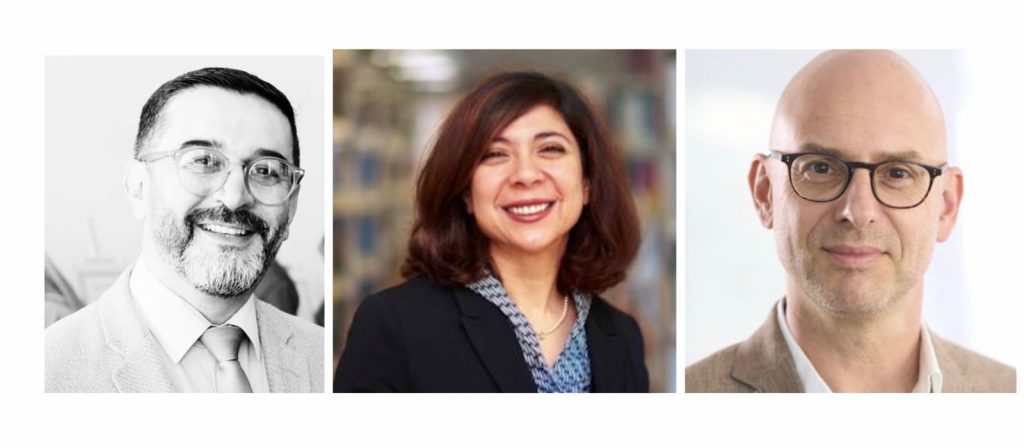
The session brought together Professor Thomas Hanitzsch (LMU Munich), Chair of the Worlds of Journalism Study (WJS); Professor Hanan Badr (University of Salzburg), WJS Executive Committee member; and Dr Shwan Adam Aivas, Associate Professor at Sulaimani Polytechnic University and Chairperson of the Kurdish Media Watchdog Organisation (CHMK). In this online meeting, the leaders focused on the strategic opportunities and logistical frameworks required to include a comprehensive Kurdish sample in the upcoming fourth wave (WJS4) of this prestigious global project. To appreciate the significance of this inclusion, it is helpful to look at how the WJS project has evolved over the nearly two decades:
-
Wave 1 (2007–2011): A pilot phase in 21 countries that established the first comparative framework for journalism cultures.
-
Wave 2 (2012–2016): A massive expansion to 67 countries. This wave provided the methodological foundation for Dr Shwan’s 2017 doctoral research.
-
Wave 3 (2021–2023): Included over 100 nations, pivoting toward digital transformation, safety, and the “fake news” phenomenon.
-
Wave 4 (2024–2026): The current phase, focusing on resilience and transformation. This is where the Kurdish sample will finally be integrated to study journalism in fragmented and transitional landscapes.
A Transnational Research Initiative
This initiative seeks to include Kurdish journalists practising across Iraq, Iran, Turkey, and Syria. By bringing these voices into the global dataset, the research team aims to identify:
-
Professional Identity: How Kurdish journalists define their societal roles.
-
Media Ownership: The influence of political and private interests on editorial independence.
-
Systemic Obstacles: Legal, professional, and safety barriers across different jurisdictions.
-
Media Systems: The structural relationship between political power and media outlets.
-
Journalistic Autonomy: The degree of freedom journalists have from internal and external pressures.
Deep Roots in Academic Rigor
The collaboration is built upon the extensive work of Dr Shwan Adam Aivas. His 2017 PhD at Nottingham Trent University, titled “Kurdish Journalism Cultures: Shifting Boundaries of Privacy Understandings amongst Professional Role Orientations of Journalists,” utilized WJS methodology to survey 142 journalists. His findings identified the “Detached Watchdog” and “Populist Disseminator” as the dominant models in the region, noting how partisanship often subordinates professional standards. “Since my 2017 study, the landscape has continued to shift,” Dr Shwan noted. “Our goal now is to use WJS4 to examine how digital convergence and power dynamics impact the ethical ideologies and professional roles of journalists across all parts of Kurdistan.”
Navigating Challenges and Building Networks
Professors Hanitzsch and Badr emphasised that the Kurdish case study offers a unique window into journalism within transitional societies. However, they identified several critical challenges:
-
Safety and Access: Managing the risks of data collection in conflict-affected areas.
-
Political Transitions: Analyzing the shift from dictatorship toward democracy.
-
Media Infrastructure: Understanding the lack of independent regulation and the dominance of political party media.
In response, the participants decided to create a new, dedicated network for the Kurdish sample. This marks a vital milestone, as it is the first time this unique case study will be integrated into the global WJS project in such a comprehensive, systematic manner.
A Call to Action for Kurdish Journalists
Moving forward, CHMK (established in 2017) will coordinate with regional partners to prepare for the data collection phase, ensuring the Kurdish context is represented with the highest technical and academic rigour.
Dr Shwan Adam Aivas is calling upon journalists across all parts of Kurdistan to participate in this landmark project. Their involvement is essential for collecting and analyzing real-world data that accurately reflects the reality of Kurdish journalism cultures on the world stage.